
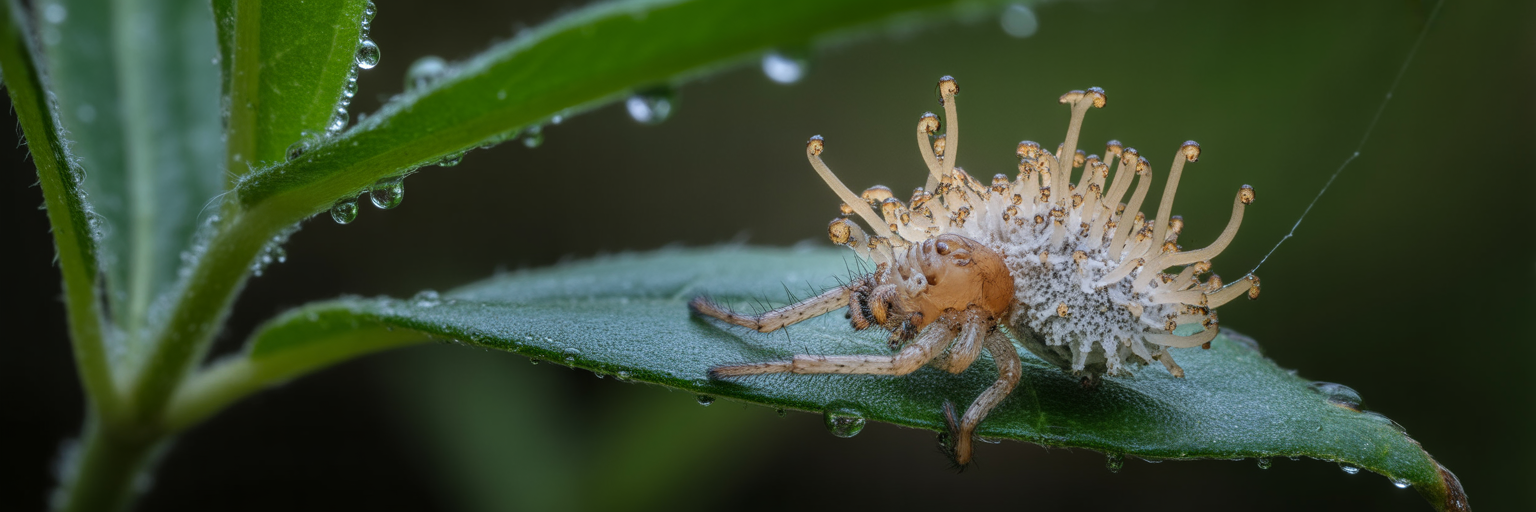
Alright, let’s talk about something that sounds like it crawled straight out of a horror movie but is happening right under our noses. When you hear the term zombie spiders, your mind probably jumps to eight-legged ghouls scuttling around looking for brains. The reality, my friend, is so much weirder and, frankly, more insulting to the spider. This isn’t about a hunger for brains. It’s a story of a hostile takeover, a microscopic coup where a parasite turns a spider into its personal, eight-legged Uber with a one-way ticket to a gruesome end.
What in the World Are Zombie Spiders?
The main villain in this particular nature documentary from hell is a fungus, often from the genus Cordyceps or its relatives. One of the most famous is the Gibellula fungus. A particularly charming species, Gibellula attenboroughii, is named after Sir David Attenborough. Of course the planet’s favorite nature narrator has a zombie-making fungus named after him. It just feels right. This isn’t some one-off freak of nature, either. There’s a whole family of fungi that have perfected the art of spider mind control.
The infection process is a masterclass in tiny terror. It’s so diabolical, we have to break it down step by step.
- The Ambush: It all starts with a single, microscopic spore landing on an unsuspecting spider. The spider is just going about its day, maybe thinking about catching a fly or tidying up its web, when its doom lands silently on its back. It’s less of a dramatic attack and more of a terrible, terrible workplace accident.
- The Break-In: The spore doesn’t just sit there. It germinates and physically drills its way through the spider’s tough exoskeleton. Think of it as a microscopic home invasion, but instead of stealing your TV, the intruder plans to steal your entire body and mind.
- The Awful Roommate: Once inside, the fungus begins to grow, spreading its thread-like mycelium throughout the spider’s body. It slowly replaces the spider’s internal organs with its own fungal tissue. This is officially the world’s worst roommate situation. It eats you from the inside out, it doesn’t pay rent, and its grand finale involves wearing your corpse like a fuzzy, spore-releasing coat.
As the fungus takes over, it hijacks the spider’s nervous system. The spider, now a puppet, abandons its web, its home, and its entire way of life. It is compelled to climb, always climb, to a high, exposed spot, usually on the underside of a leaf. This is the spider’s last climb, a final, unwilling pilgrimage for its fungal overlord. Why? It’s all about location, location, location. The fungus needs the perfect vantage point for the next stage of its plan.
Once the spider reaches the designated spot and latches on with a death grip, it dies. Then comes the grand finale. The fungus erupts from the spider’s body, growing beautiful but deadly fruiting stalks that look like tiny, alien antlers. These structures are designed to do one thing: rain spores down on the forest floor below, ready to infect the next wave of unsuspecting victims. Nature really does have a flair for the dramatic, doesn’t it?
When It’s Not a Fungus, It’s a Wasp
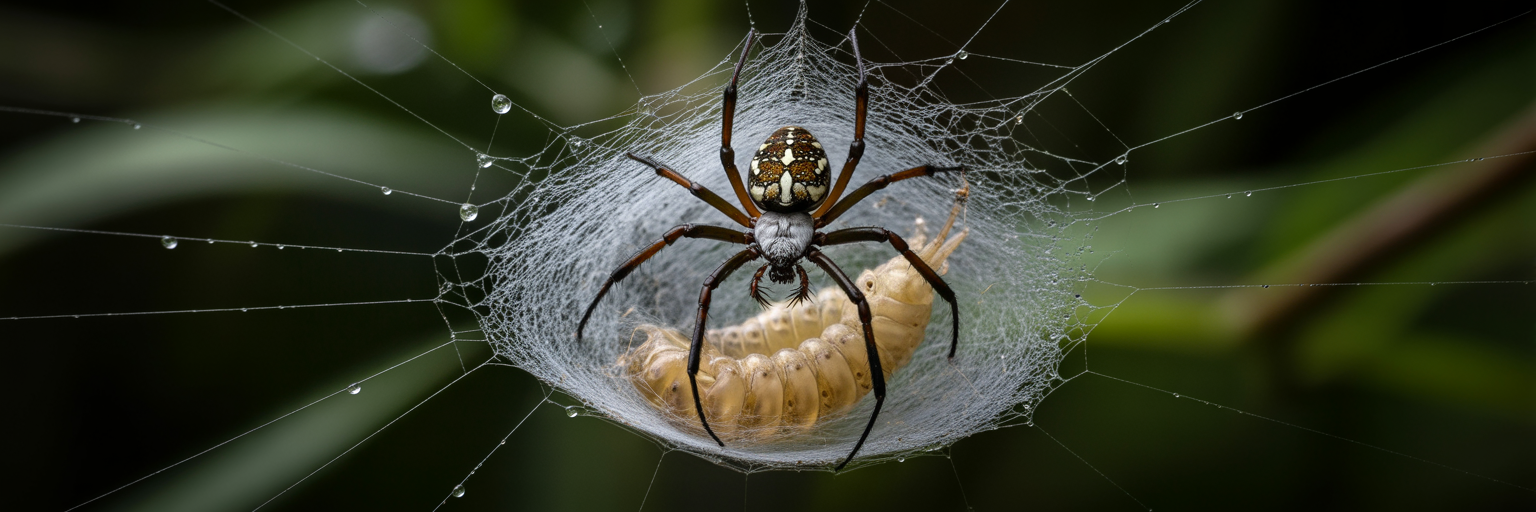
Just when you thought it couldn’t get any worse for spiders, allow me to introduce another contender for the “Worst Thing to Happen to a Spider” award. If you thought the fungus was bad, the parasitoid wasp from the Zatypota genus would like you to hold its beer. Fungi don’t have a monopoly on this grim business. Wasps got in on the action with a method that is arguably more personal, more devious, and just plain rude.
Unlike the fungus’s scattergun approach with spores, the mother wasp performs a quick, surgical strike. She finds a suitable spider and injects a single egg directly into its abdomen. Congratulations, spider, you are now an unwilling, living nursery. It’s the most thankless babysitting gig in the entire animal kingdom, and the pay is, well, you’ll see.
The wasp larva hatches inside the spider and begins its life as a freeloader of the highest order. It carefully feeds on the spider’s hemolymph, which is basically spider blood. The spider becomes a personal, eight-legged juice box for the growing larva. The truly twisted part is that the larva keeps its host alive and functioning. It chemically manipulates the spider, making it docile and compliant while it slowly fattens up.
Then comes the final, bizarre act. When the larva is almost ready to pupate, it unleashes its ultimate mind-control trick. It hijacks the spider’s brain and forces it to build a completely new kind of web. This isn’t a web for catching flies. It’s a super-durable, heavily reinforced cocoon, a custom-built hammock designed to protect the wasp pupa from predators and the elements. The spider literally builds a fortress for its own killer. Once the construction is complete, the larva finally kills its host and eats it, enjoying its first meal in its new, custom-built home. The world of parasitoid wasps on spiders is a dark one indeed.
| Factor | The Fungus Method (e.g., Gibellula) | The Wasp Method (e.g., Zatypota) |
|---|---|---|
| Method of Attack | External spore lands on spider and burrows in. | Wasp injects an egg directly into the spider’s abdomen. |
| What the Parasite Eats | Consumes the spider’s internal organs, replacing them with fungal mass. | Larva drinks the spider’s blood (hemolymph), keeping it alive. |
| The ‘Zombie’ Mission | Force the spider to climb high for spore dispersal. | Force the spider to build a protective cocoon for the pupa. |
| The Host’s Final Act | Dies clinging to a leaf or branch, becoming a fungal launchpad. | Builds a web for its killer, then gets eaten. |
| Level of Personal Insult | High. Your body is stolen and worn like a suit. | Extreme. You become a nanny, a chef, and the nursery. |
This table breaks down the horrifyingly different strategies these two parasites use to manipulate their spider hosts. While both end in the spider’s demise, the journey there is uniquely terrible.
Finding Zombie Spiders in Your Neighborhood
Okay, let’s bring the horror home, shall we? Now you’re probably wondering, with a healthy dose of paranoia, where these zombie spiders actually live. The good news is they’re not just in some remote, spooky jungle. They’re practically everywhere! Known populations have been found in the United Kingdom, Ireland, Russia, New Zealand, and, you guessed it, North America. This isn’t some faraway phenomenon. As reported by The Independent, fungus-encrusted zombie spiders are now being found in America and freaking out homeowners. So yes, they could be closer than you think.
So, where should you look for these fuzzy little mummies? They have a type, and it’s usually the places you least want to go. Here are some of their favorite domestic hideouts:
- Wine cellars
- Damp basements
- Forgotten sheds
- Dusty attics
- Underneath garden decks
You now have a legitimate, scientific excuse to avoid cleaning out that creepy corner of the basement. “Sorry, honey, I can’t go down there. I’m respecting the fungal life cycle.” The reason they love these spots is simple. These locations are the fungal equivalent of a five-star resort: cool, humid, dark, and, most importantly, undisturbed. This environment is perfect for the fungus to complete its hostile takeover and have its grand, spore-releasing finale without drying out.
So next time you’re doing some spring cleaning, why not turn it into a bit of spooky science exploration? Think of it as a treasure hunt, but the treasure is a mummified spider corpse being worn by a fungus. The idea that one of these could be lurking just out of sight adds a certain creepy-crawly thrill to household chores. “Checking for zombie spiders” is now a valid excuse for procrastinating on just about anything. You’re welcome.
Are We Next on the Fungus’s To-Do List?
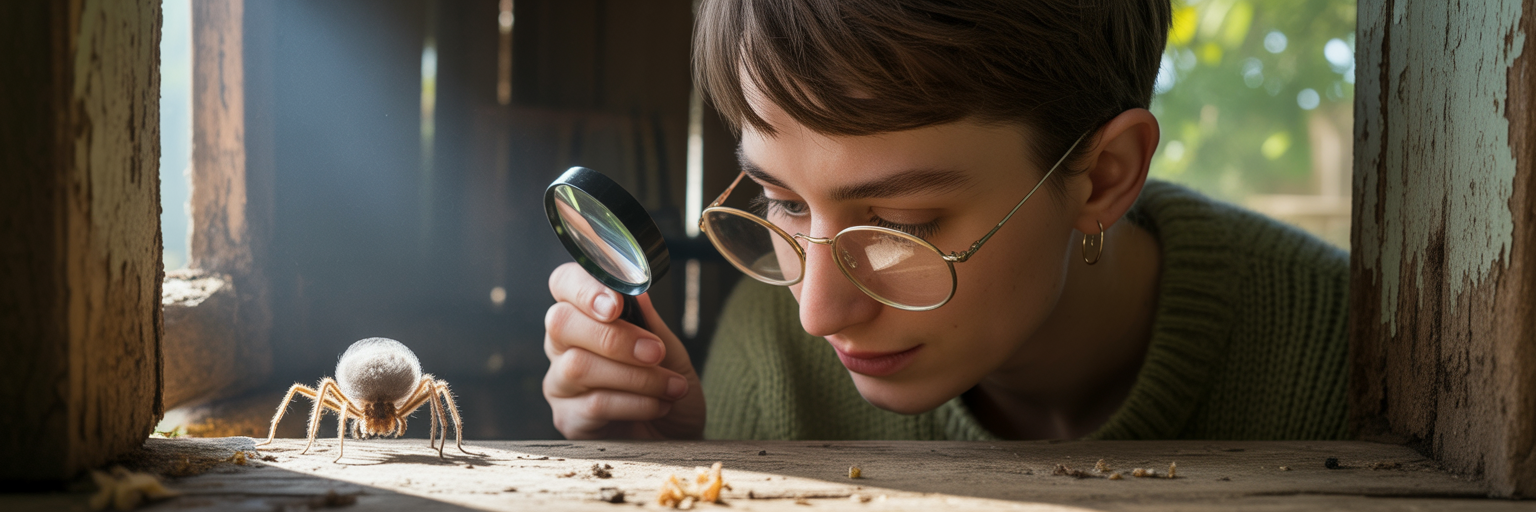
This is the point where your brain starts asking the important questions. The ones that keep you up at night. Can this happen to me? My cat? My ridiculously fluffy dog, Bartholomew? I’m here to address your biggest fear head-on, and the answer is a big, comforting, capital-letters NO.
The science behind our safety is actually pretty simple and, for the fungus, quite insulting. Our warm-blooded bodies are basically blast furnaces. Your core temperature of around 98.6°F (37°C) is way too hot for these fungi to handle. They are specifically adapted for the cool, slow life of a cold-blooded arthropod. Trying to infect a human would be like trying to build a snowman in a volcano. It’s just not going to work.
This brings us to the wonderful concept of host specificity, which is a great source of weird animal facts. These fungi and wasps have spent millions of years evolving to be perfect spider-manipulating machines. Think of it like a key and a lock. Their biological “keys” are custom-made to fit a very specific spider “lock.” Our biology is so wildly different that their keys wouldn’t even fit in our keyhole, let alone turn the tumbler. They simply lack the genetic tools to infect a mammal.
So, you can rest easy. While a zombie apocalypse is fun for movies, the real-life zombie-makers are incredibly picky eaters. They’re not interested in us. We’re too warm, too big, and our brains are probably too full of anxieties about work and what to watch on streaming services for their simple tastes. They’ll stick to the spiders, thank you very much.
The Spider Who Faked Being a Zombie
Just when you think you’ve wrapped your head around this whole zombie spider thing, nature throws a plot twist at you. If you thought a spider being turned into a zombie was weird, get ready for a spider that *pretends* to be a zombie spider just to survive. This is nature playing 4D chess while the rest of us are playing checkers.
Meet the master of deception: the Amazonian spider *Taczanowskia waska*. This clever arachnid is an evolutionary genius that looked at the zombie apocalypse happening around it and said, “I can work with this.” It has evolved to look exactly like a dead, fungus-infected spider corpse. It hangs in its web, motionless, covered in white, splotchy markings that perfectly mimic fungal growth. It just dangles there, looking all dead and moldy and thoroughly unappetizing.
The brilliance of this strategy is off the charts. Predators, especially those pesky parasitoid wasps we just talked about, are looking for healthy, juicy hosts to turn into nurseries. They see what looks like a dead, fungus-ridden meal and fly right on by. It’s the ultimate defense mechanism: “Don’t eat me, I’m already dead and have gone bad!” This is the natural world’s equivalent of playing possum, but with way more fungal flair and a lot more commitment. It’s one of the most bizarre and wonderful weird animal facts out there.
This all ties into the grand evolutionary arms race. It’s a perfect example of Batesian mimicry, where a harmless species evolves to imitate the warning signals of a harmful one. In this case, the spider is imitating something that’s not just harmful, but already defeated. The parasites evolve to kill spiders, so another spider evolves to look like their victims to avoid the same fate. It’s a constant, crazy game of cat-and-mouse-and-fungus-and-spider that proves just how wonderfully strange and competitive nature can be.
You Can Be a Zombie Spider Hunter
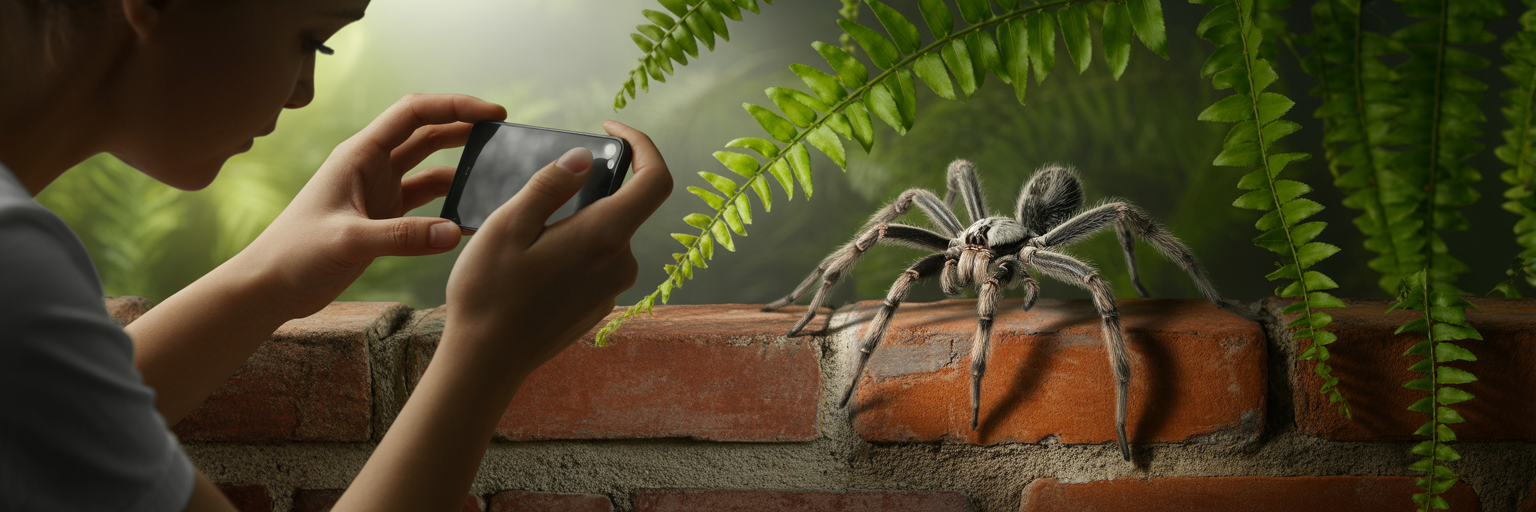
Congratulations! You’ve made it through the crash course on zombie spiders. You are now a bona fide expert, ready to regale your friends with horrifying tales of fungal puppeteers and wasp overlords. But why stop there? You can join the hunt—for science!
Welcome to the wonderful world of citizen science. You don’t need a PhD or a fancy lab coat to contribute to real scientific discovery. Thanks to platforms like iNaturalist, everyday people are helping scientists track the spread and diversity of these fascinating parasites just by using their phones. This is where the community of citizen science spiders enthusiasts comes together.
Here’s your call to action. The next time you’re cleaning out the shed, exploring a damp basement, or on a hike, keep your eyes peeled. If you see a weird, fuzzy, mummified-looking spider clinging to a leaf or a wall, don’t just shriek. Okay, you can shriek a little, but then get your phone. Snap a photo and upload it to a citizen science platform. You don’t have to be an expert. The community and actual scientists will help with identification. Your creepy find could be a valuable data point for research on fungal diversity or parasite distribution.
This is a fantastic way to engage with the weirdness of nature directly. It turns a potentially scary discovery into a moment of curiosity and contribution. You’re not just cleaning the attic; you’re on a scientific expedition. So go out there, my friend, and find some cool, creepy science.