An Unsettling Encounter in the Garden
For generations, gardeners have welcomed the praying mantis as a silent partner. We see them as beneficial insects, diligently protecting our roses and tomatoes from aphids and other pests. Their patient, almost meditative presence among the leaves feels like a sign of a healthy garden ecosystem. This perception makes the truth of their capabilities all the more jarring.
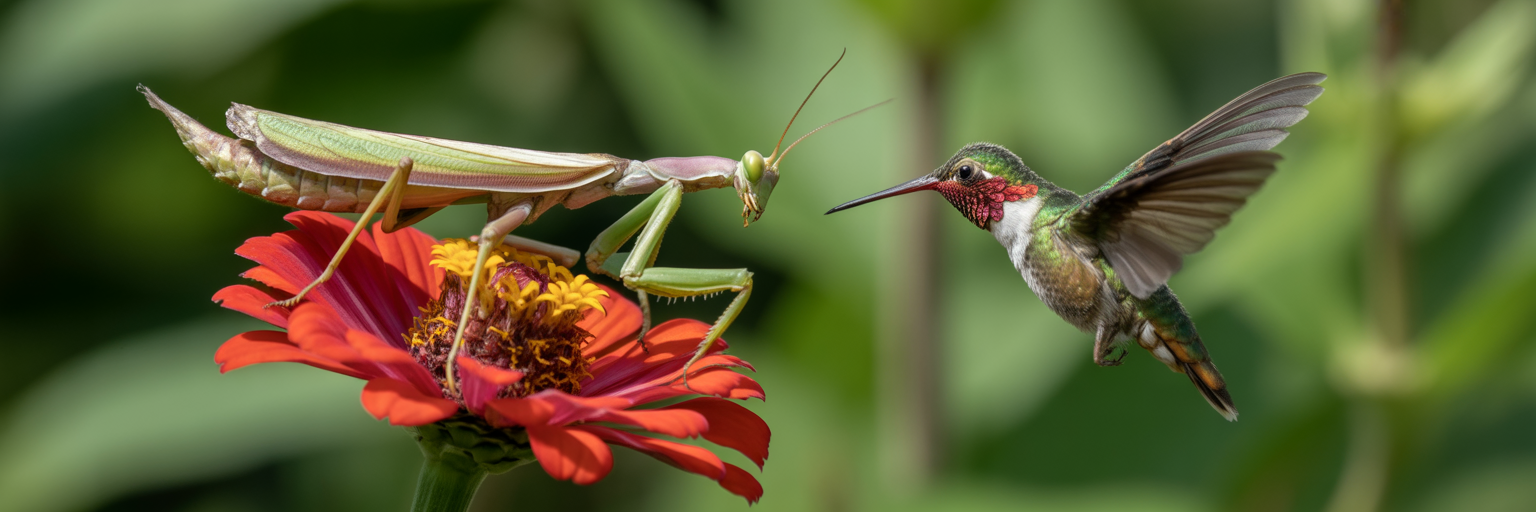
Picture a classic American backyard in late summer. Sunlight filters through the trees, bees buzz around the flowerbeds, and a hummingbird feeder hangs from a porch awning, its sweet nectar attracting the iridescent flash of its tiny visitors. It’s a scene of tranquility. Now, imagine one of those hummingbirds, hovering for a moment to drink, suddenly snatched from the air by a green predator lurking unseen on the feeder itself. The delicate bird is trapped in the grip of a praying mantis.
This image feels wrong, a violation of the natural order we assume exists. A bird should not fall prey to an insect. Yet, this unsettling event is not a freak occurrence or a myth. The shocking encounter between a praying mantis and a hummingbird is a scientifically documented reality. While rare, it reveals a side of this common garden insect that challenges everything we thought we knew about the food chain in our own backyards.
Anatomy of a Formidable Predator
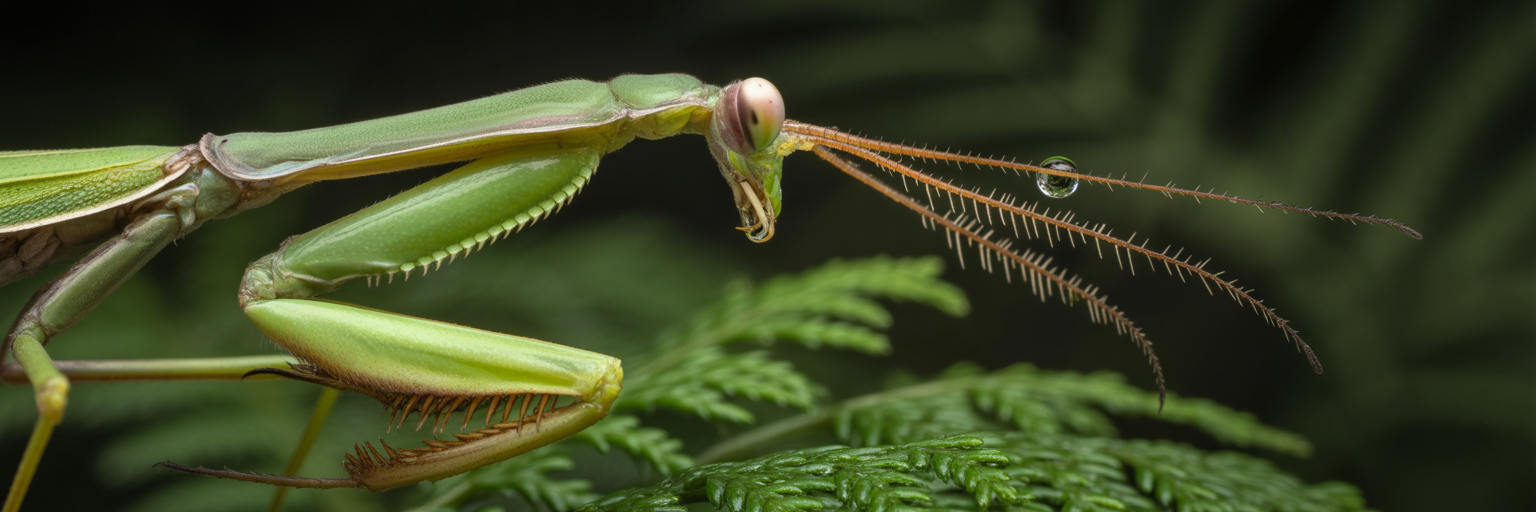
The praying mantis’s ability to hunt prey many times its size is not an accident; it is the result of a perfectly engineered predatory design. Its body is a collection of specialized tools that work in concert to make it one of nature’s most effective ambush hunters. Understanding its anatomy is key to understanding how an insect can overpower a bird.
The Raptorial Forelegs: A Perfect Trap
The most iconic feature of the mantis is its powerful front legs, known as raptorial forelegs. These are not simple limbs; they are sophisticated biological traps. The femur and tibia are lined with sharp, interlocking spines. When a mantis strikes, these legs snap shut with incredible force, and the spines function like the teeth of a steel trap, creating an inescapable grip. Once these legs close on a hummingbird’s delicate body, there is virtually no chance of escape.
Compound Vision for a Precision Strike
A mantis has five eyes: two large compound eyes and three smaller simple eyes located between them. The large compound eyes grant it a wide field of view and exceptional depth perception. This binocular vision allows the mantis to accurately judge distance and calculate the precise moment to strike. It can perceive the slightest movement, making it incredibly sensitive to the approach of potential prey.
A Head That Turns 180 Degrees
Unlike most insects, a praying mantis can turn its triangular head a full 180 degrees. This remarkable flexibility allows it to scan its surroundings for both prey and threats without moving its body. By remaining perfectly still, it avoids betraying its position to the keen eyes of a bird, giving it a crucial element of surprise.
The Art of Invisibility
The final piece of its predatory puzzle is its mastery of camouflage. With bodies that mimic leaves, twigs, and even flowers, mantises blend seamlessly into their environment. Their coloration and slender shape make them nearly invisible to a fast-moving hummingbird focused on finding nectar. The bird simply does not see the danger until it is far too late.
The Patient Ambush at the Feeder
A praying mantis does not chase its prey. Its success is built on a strategy of extreme patience and explosive action. The core of mantis hunting behavior is the ambush, a technique it has perfected over millions of years. It can remain completely motionless for hours, a living statue waiting for the perfect opportunity.
This is why hummingbird feeders have become such effective, if unintentional, hunting grounds. Feeders create a predictable, high-traffic location where hummingbirds gather. The birds, focused on feeding and competing with each other, become less wary of their surroundings. A mantis perched on or near a feeder has a steady stream of potential targets delivered directly to it.
The mantis has a very short strike range, typically between five and ten centimeters. This means it must wait for the hummingbird to come extremely close. As a hummingbird hovers to drink from a feeding port, it enters this kill zone. The strike itself is one of the fastest movements in the animal kingdom, taking only milliseconds. The bird has no time to register the threat or react. The mantis’s forelegs lash out, seizing the bird in a grip from which it cannot pull free. This combination of patience and speed is a hallmark of many successful predators, though few are as surprising as the mantis. Other creatures have also evolved for incredible speed, a topic explored in an article about the star-nosed mole that eats faster than you can blink.
Why Hummingbirds Are Uniquely Vulnerable

While it seems impossible for an insect to catch a creature as agile as a hummingbird, the bird has several characteristics that make it uniquely vulnerable to this specific predator. The matchup is less about a bird versus an insect and more about a specialist hunter exploiting the behaviors of its prey.
First is the hummingbird’s small size. While incredibly fast and maneuverable in flight, its body is fragile. A large praying mantis, particularly a non-native species, can be nearly as long as a hummingbird and possess more than enough strength to overpower it once captured. The bird’s agility is nullified the moment it is caught.
The most critical factor is the hummingbird’s feeding behavior. To drink nectar, it must hover, becoming a stationary target for a brief but fatal moment. This act of hovering perfectly aligns with the mantis’s ambush strategy. The predator doesn’t need to catch the bird in mid-flight; it just needs to wait for the bird to pause within its strike range.
Furthermore, a hummingbird’s threat perception is not tuned to this kind of danger. It has evolved to spot and evade larger, moving predators from above, like hawks, or ground-based threats like cats. A camouflaged, motionless insect on a flower or feeder simply doesn’t register as a threat. Finally, a hummingbird’s incredibly high metabolism requires it to feed almost constantly. This relentless need for fuel can lead to more frequent and sometimes less cautious visits to feeders, increasing its exposure to a waiting mantis.
Scientific Records of Avian Predation
The idea of a praying mantis eating a hummingbird might sound like a tall tale, but it is a well-documented scientific fact. For years, reports were largely anecdotal, shared among shocked birdwatchers and gardeners. However, dedicated research has since compiled these observations into a clear and startling picture of avian predation by mantises.
According to a study highlighted by phys.org, researchers documented 147 cases of mantises preying on small birds across 13 different countries. This data confirms that the phenomenon is not isolated to one region but occurs worldwide. The study revealed that 12 different species of praying mantis have been observed hunting birds, showing this is a broader predatory capability than previously understood.
Most significantly, the research found that over 70% of these documented attacks occurred in the United States. Scientists link this directly to the immense popularity of setting up backyard hummingbird feeders. These feeders, while intended to help birds, inadvertently create ideal hunting grounds for large mantises by concentrating prey in one spot. This answers the question “do mantises eat birds?” with a definitive yes, backed by global data.
What makes this research particularly powerful is the role of citizen science. Many of the documented cases came from amateur birdwatchers, photographers, and gardeners who captured and reported these rare events. It’s a reminder that everyday observations in our own backyards can contribute valuable data to the scientific community and help us better understand the complex interactions of the natural world.
The Impact of Large, Non-Native Mantises

While several mantis species have been observed preying on birds, one species is responsible for the majority of these incidents in the United States: the Chinese mantis (Tenodera sinensis). Understanding the difference between this introduced species and our native mantises is crucial to grasping the Chinese mantis hummingbird phenomenon.
The Chinese mantis was intentionally introduced to the U.S. from Asia in the late 1800s. It was released as a form of biological pest control with the hope that it would protect crops by eating harmful insects. However, this introduction came with unintended ecological consequences. As a large, generalist predator, the Chinese mantis does not discriminate. It consumes not only pests but also beneficial native insects like bees and butterflies, and, as we now know, small vertebrates, including hummingbirds.
The sheer size of the Chinese mantis is the primary factor. Growing up to five inches long, it is more than capable of overpowering a hummingbird. In contrast, most native U.S. mantises, like the Carolina mantis, are much smaller and pose little to no threat to birds. This distinction is important for gardeners and bird lovers to recognize.
| Feature | Chinese Mantis (Tenodera sinensis) | Carolina Mantis (Stagmomantis carolina) |
|---|---|---|
| Origin | Non-native; introduced from Asia | Native to North America |
| Average Size | 4 to 5 inches long | 2 to 2.5 inches long |
| Primary Threat to Birds | Significant; large enough to overpower hummingbirds | Minimal; generally too small to be a threat |
| Identifying Marks | Large body, brown or green, vertical stripe on face | Smaller body, gray/brown/green, dark spot on forewings |
| Ecological Role | Generalist predator, preys on pests and beneficials | Integrated predator in its native ecosystem |
The Mechanics of a Grisly Meal
The hunt ends with the strike, but the most unsettling part of the interaction is what happens next. The process by which a praying mantis eats hummingbird prey is methodical and efficient, highlighting its raw predatory power. It is a stark reminder of the unsentimental nature of the food chain.
Once the hummingbird is snared by the spined forelegs, the mantis works quickly to immobilize it. The grip is incredibly strong, and the mantis often adjusts its hold to secure the bird’s head or neck. This prevents the bird from struggling and allows the mantis to begin feeding. In many documented cases, the mantis starts to consume its prey while the bird is still alive.
Using its powerful mandibles, the mantis chews through the bird’s body. One particularly gruesome but common behavior is for the mantis to pierce the hummingbird’s skull to access the brain tissue. The brain is a high-energy, nutrient-rich food source, making it a primary target. This clinical, almost surgical approach underscores that this is not a random act but a calculated feeding strategy.
Due to the size difference, the mantis rarely consumes the entire bird. It will eat its fill of the most nutrient-dense parts and then abandon the rest. The sight of a partially eaten hummingbird beneath a feeder is often the first and only evidence a homeowner has that this predator is at work in their garden.
Instinct, Hunger, or Mistake?

Why does a praying mantis attack something as large and unusual as a hummingbird? The motivation behind this behavior is likely a combination of factors rather than a single cause. Scientists believe it is not a targeted hunt for birds but a convergence of instinct, opportunity, and circumstance.
The primary driver is likely a simple, hardwired predatory response. A mantis’s brain is programmed to strike at anything of a suitable size that moves within its range. A hovering hummingbird, with its rapid wing beats and momentary stillness, may trigger the same instinctual attack as a large moth or beetle. The mantis doesn’t recognize it as a bird; it recognizes it as potential food.
Extreme hunger could also play a role. A starving mantis may be more willing to take risks and attack larger prey that it might otherwise ignore. The potential reward of a high-energy meal could outweigh the risk of tackling a more formidable animal. There is also the possibility of mistaken identity. Perched on a red feeder, a mantis might mistake the iridescent gorget of a male hummingbird for the bright petals of a flower or the colorful wings of another insect.
An intriguing, though less proven, theory is the idea of learned behavior. Some observations suggest that a mantis might return to a feeder after a successful kill, having learned it is a reliable source of large prey. This would imply a level of cognitive complexity not often associated with insects, though nature is full of surprises, such as the caterpillar that manipulates an entire ant colony.
How to Create a Safer Hummingbird Haven
Discovering that your garden may be a hunting ground can be distressing, but there are simple, effective steps you can take to protect hummingbirds from mantises without harming these native predators. The goal is to create a safe space for birds while respecting the mantis’s role in the ecosystem.
If you find a large mantis, especially a Chinese mantis, on or near your hummingbird feeder, the best course of action is to relocate it. Killing the mantis is unnecessary, as even non-native species contribute to pest control. Here’s how to move one safely:
- Do not handle the mantis directly; its spined legs can give a painful pinch.
- Find a stick or branch at least a foot long. Gently and slowly press the stick against the mantis’s abdomen. Its instinct will be to climb onto the new perch.
- Once the mantis is on the stick, calmly walk it to another part of your yard, such as a shrub or vegetable garden far away from the feeders, and let it crawl off.
Beyond relocation, hummingbird feeder safety involves prevention. Place your feeders in open areas, at least five feet away from any shrubs, trees, or walls where a mantis can hide and wait in ambush. Regularly check your feeders and the surrounding areas for waiting mantises. A well-designed garden space considers these dynamics. Creating a backyard that is both beautiful and functional involves thinking about everything from plant placement to furniture layout, and for those looking to customize their outdoor environment, a practical guide can offer valuable insights.
The Ecological Ripple Effect

The image of a praying mantis preying on a hummingbird is a powerful illustration of the complex and often unexpected dynamics within an ecosystem. It’s tempting to label the mantis a villain and the hummingbird a victim, but nature operates without such judgments. This interaction is not a freak event but a fascinating example of predator-prey relationships in a world shaped by human hands.
The prevalence of this phenomenon in the United States is a direct result of our actions. The introduction of non-native species like the Chinese mantis created what ecologists call “novel ecosystems,” where species that did not evolve together are suddenly forced to interact. The mantis, a generalist predator, simply took advantage of a new food source that appeared in its environment.
Suburban backyards are not pristine wilderness; they are managed ecosystems. Our choices—what we plant, whether we use pesticides, and where we place our bird feeders—all alter the natural balance. A hummingbird feeder is a perfect example. It supports bird populations but also creates an artificial concentration of prey that can attract predators. Understanding this helps us become more responsible stewards of the small slice of nature we manage. The mantis is simply an effective predator acting on instinct. This complex interplay is a common theme in nature, where even the most unusual survival strategies have a place, much like the parrotfish creating its own protective bubble to survive.
Frequently Asked Questions About Mantises and Hummingbirds
Should I kill large praying mantises in my garden?
No, you should not kill them. Even large, non-native mantises like the Chinese mantis are effective predators of garden pests such as aphids and caterpillars. The best approach is to relocate them. Gently coax the mantis onto a stick and move it to a different part of your garden, far away from bird feeders or flowers that hummingbirds frequent.
Are native U.S. mantis species a threat to hummingbirds?
Generally, no. Native species like the Carolina mantis are typically too small (around 2 to 2.5 inches) to overpower a hummingbird. The risk almost exclusively comes from larger, non-native species like the Chinese mantis, which can reach lengths of 4 to 5 inches and have the size and strength necessary to capture a small bird.
How can I tell a Chinese mantis apart from a native one?
The easiest way to tell them apart is by size. If the mantis is over four inches long, it is almost certainly a non-native Chinese or European mantis. Chinese mantises also often have a vertical green or yellow stripe on their face between their eyes, a feature native species lack. Native Carolina mantises are smaller and sometimes have a dark spot on their forewings.
Besides hummingbirds, what other surprising animals do mantises eat?
Large mantises are opportunistic predators and have been documented eating a surprising variety of small animals. Their diet can include not only other insects and spiders but also small reptiles and amphibians like lizards, frogs, and newts. The key factor is whether the prey is small enough for the mantis to overpower.
Does a mantis on my feeder mean my hummingbirds are in immediate danger?
While the event is rare, a large mantis on a feeder presents a real risk. It doesn’t guarantee an attack will happen, but the conditions are set for one. The mantis is there because it recognizes the feeder as a location with abundant insect activity, and it may attack a hummingbird that comes within its strike range. It is best to relocate the mantis as a preventative measure.
Why can’t a hummingbird escape?
A hummingbird can’t escape due to a combination of three factors. First, the mantis’s camouflage makes it nearly invisible, so the bird doesn’t see the threat. Second, the mantis’s strike is incredibly fast, leaving no time for the bird to react. Finally, the mantis’s spined forelegs create a powerful, inescapable trap that the small bird cannot break free from once caught.