
The Humble Sea Snail With Teeth of Record-Breaking Strength
Anyone who has walked along a rocky coastline in the United States has likely seen them: small, conical shells clamped firmly to stone surfaces, seemingly as much a part of the rock as the barnacles. These are limpets, common marine snails that appear unremarkable at first glance. Yet, hidden within this unassuming creature is a biological marvel that has rewritten our understanding of natural materials. Scientific research has revealed that the microscopic teeth of this sea snail with teeth possess a tensile strength greater than that of spider silk, long considered the gold standard of biological materials. This discovery is surprising, as we often associate immense strength with large, powerful animals, not a small mollusk clinging to a rock.
This creature is the bulldozer of the seashore, relentlessly scraping its food from the hardest surfaces in one of the planet’s most punishing environments. Its home in the intertidal zone, a place of constant assault from crashing waves and drastic temperature changes, demands extraordinary adaptations for survival. The limpet’s ability to feed in such conditions is entirely dependent on the incredible properties of its teeth. This article explores the science behind this phenomenal strength, examining the unique feeding tool called the radula and the precise nanostructure that makes it so effective. We will also clarify the important differences between strength, hardness, and toughness, and see how this natural wonder is inspiring a new generation of advanced materials.
A Life of Scraping Rocks in a Turbulent World
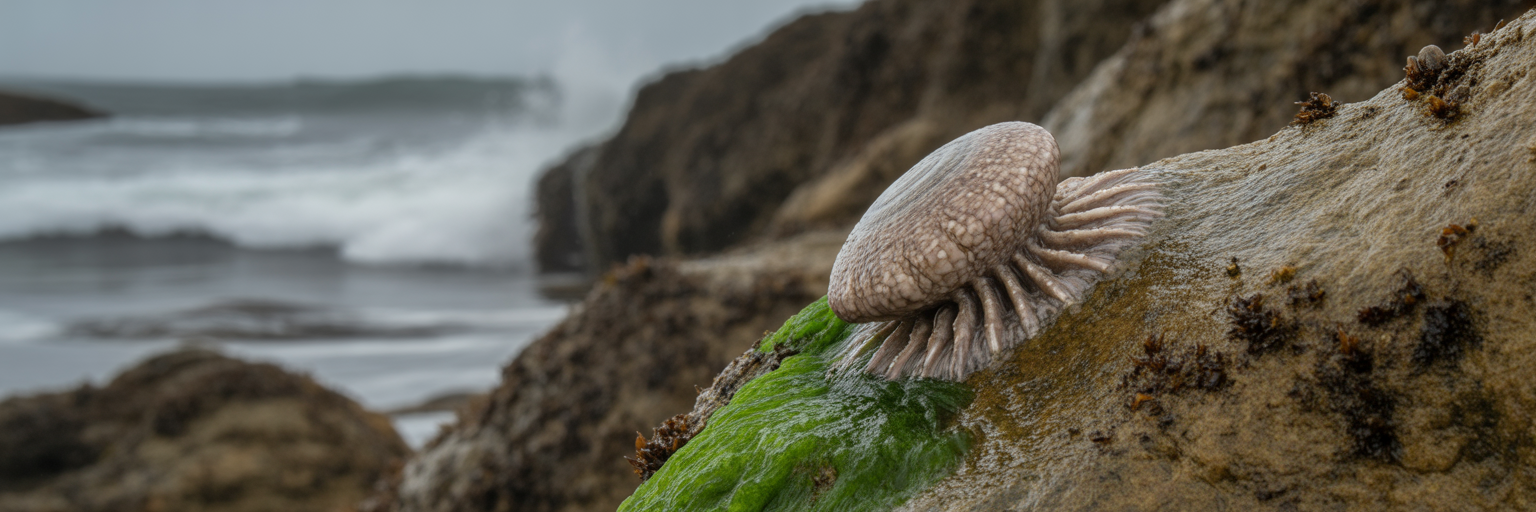
To understand why a limpet needs such powerful teeth, one must first appreciate the brutal reality of its habitat. The intertidal zone is a world of perpetual violence. At high tide, it is battered by the full force of ocean waves, which can exert immense pressure on any organism trying to hold its ground. At low tide, it is exposed to the air, leading to dramatic shifts in temperature and the risk of drying out. These environmental pressures have driven the evolution of the limpet’s most famous trait: its ability to create a powerful suction with its muscular foot, allowing it to cling to rocks with incredible tenacity.
This same environment dictates how the limpet feeds. Its food source is the thin layer of algae and biofilm that grows on the surface of rocks. To eat, the limpet uses a specialized organ called the radula. When people ask what is a radula, it is best described not as a tongue, but as a flexible, ribbon-like structure that works like a microscopic file. This ribbon is covered in hundreds of rows of tiny, sharp teeth. During feeding, the limpet extends the radula from its mouth, presses it against the rock, and scrapes it across the surface to rasp away its food. This action is one of constant, grinding abrasion against hard stone.
The forces involved are enormous. The teeth must be hard enough to scrape away mineral-based algae without being worn down instantly, and strong enough to avoid snapping under the pressure. The process is so aggressive that limpets often ingest tiny mineral particles scraped from the rock itself along with their meal. This fact alone powerfully illustrates the durability required for the teeth to function. Nature has produced diverse solutions for acquiring food, such as the archerfish that shoots bugs out of the air with water, but the limpet’s approach is one of brute force and incredible material resilience, perfected over millions of years of evolution in this turbulent world.
The Nanostructure of Nature’s Strongest Material
The secret to the limpet tooth’s power lies in its composition at the microscopic level. Scientists, focusing on the common limpet species *Patella vulgata*, were able to isolate individual teeth, each less than a millimeter long, and test their material properties directly. The results were astonishing. The teeth demonstrated a tensile strength—the ability to resist being pulled apart—ranging from 3.0 to 6.5 gigapascals (GPa). To put that figure in perspective, the tensile strength of dragline spider silk, often cited as a benchmark for natural strength, is typically around 1.3 GPa. This finding established the limpet tooth as the strongest biological material yet measured.
A study published in the Royal Society journal Interface reported these remarkable findings, with values averaging around 5 GPa, a strength comparable to some of the best man-made carbon fibers. The tooth achieves this through a sophisticated composite structure. It is composed of extremely fine, needle-like goethite mineral fibers embedded within a softer, more flexible protein matrix of chitin. Goethite is a common iron-based mineral, but the way the limpet’s body produces it is what makes all the difference.
The most critical factor is the size of these fibers. The limpet’s biological processes grow the goethite crystals to a specific, critical diameter at the nanometer scale. In larger structures, even in high-performance materials, microscopic flaws and defects are always present. These imperfections act as weak points where cracks can begin, ultimately limiting the material’s overall strength. By keeping the goethite fibers incredibly thin, the limpet’s tooth avoids these inherent flaws. This allows the material to approach its theoretical maximum strength, a principle that materials scientists are now trying to replicate. The tooth is not strong just because it contains a hard mineral; it is strong because it is a perfectly structured nanocomposite.
Defining Strength, Hardness, and Toughness
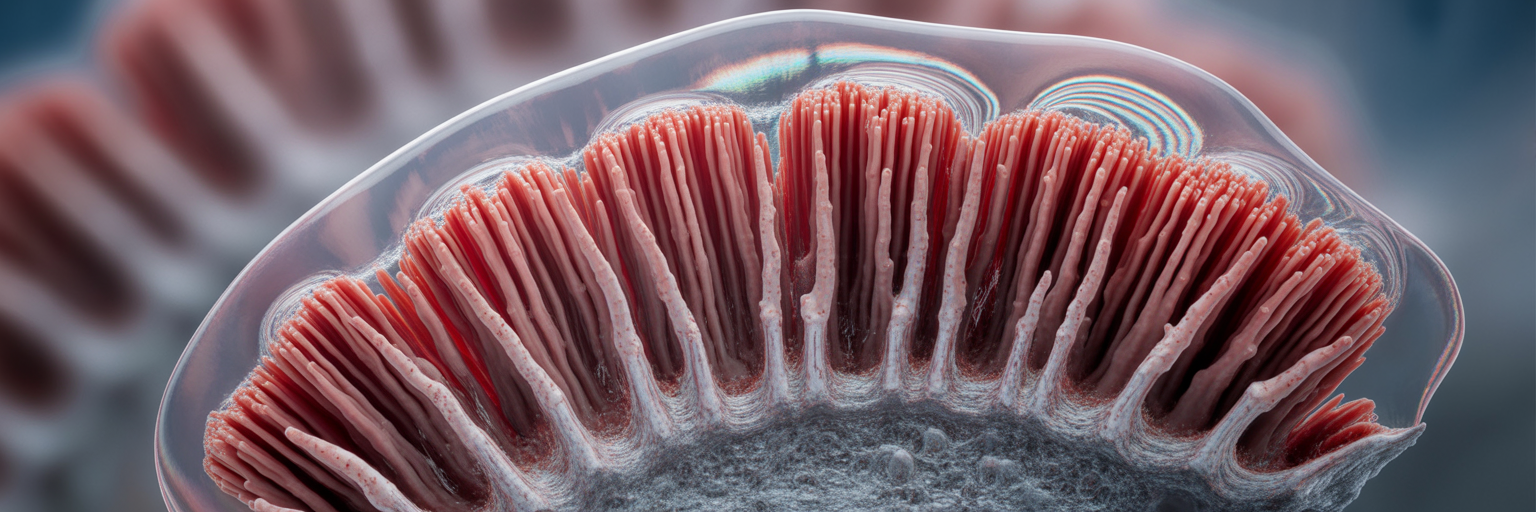
When discussing the limpet tooth, it is easy to make broad claims about its superiority. However, scientific accuracy requires a more nuanced understanding of different material properties. The effectiveness of the limpet tooth comes from a masterful balance of several characteristics, not from being the best in every single category. The limpet teeth strength is a record-breaker in one specific area.
First is tensile strength, which measures the maximum stress a material can withstand while being stretched or pulled before it breaks. This is the specific property in which the limpet tooth material holds the record. It is this resistance to being pulled apart that prevents the teeth from snapping as they are dragged across a rough surface.
Next is hardness, defined as a material’s resistance to localized surface deformation, such as scratching or indentation. The goethite mineral gives the tooth its high hardness, which is essential for it to be able to scrape away algae and even bits of rock. Without this hardness, the tooth would wear away too quickly to be effective.
Finally, there is toughness, which is a material’s ability to absorb energy and deform without fracturing. A material can be very hard but also very brittle, like ceramic, which shatters easily on impact. The softer chitin matrix in the limpet tooth provides toughness, acting as a cushion that prevents the hard but brittle goethite fibers from shattering under the sudden shocks and stresses of scraping. This specialization highlights biological trade-offs, a concept seen across nature, from the limpet’s tooth to the secrets of planarian regeneration, which showcases a different form of resilience.
| Material | Tensile Strength (Resistance to Pulling) | Hardness (Resistance to Scratching) | Toughness (Resistance to Fracture) |
|---|---|---|---|
| Limpet Tooth | Extremely High | High | Moderate |
| Spider Silk | Very High | Low | Very High |
| Diamond | Variable (Low) | Extremely High | Low |
| Steel (High-Carbon) | High | High | Moderate |
| Ceramic | Low | Very High | Very Low |
This table illustrates how different materials exhibit varying levels of tensile strength, hardness, and toughness. The limpet tooth’s effectiveness comes from its unique combination of high tensile strength and high hardness, a balance not seen in the other materials. Data is based on generalized properties for comparison.
A Perfectly Engineered Renewable Rasp
Despite their incredible material properties, the teeth at the scraping end of the limpet’s radula are not invincible. The constant, grinding friction against hard rock inevitably causes them to wear down and lose their sharpness. If this were the end of the story, the limpet would quickly starve. However, nature has equipped it with a brilliant solution: a self-renewing tool.
The radula functions as a biological conveyor belt. Deep within the limpet’s body, at the base of the radular ribbon, new rows of teeth are continuously being formed. Initially, these new teeth are soft, composed mostly of the flexible chitin matrix. As they slowly move forward along the ribbon, like products on an assembly line, they pass through a region where they are gradually mineralized. The limpet’s cells infuse the chitin structure with goethite, hardening the teeth and preparing them for their demanding job.
By the time a row of teeth reaches the scraping tip of the radula, it is fully mature and hardened. As the outermost, oldest, and most worn teeth are abraded away and lost, a fresh, perfectly sharp row is pushed forward to take their place. This ensures the limpet always has an effective cutting edge. This renewable system is absolutely essential for the animal’s survival. It is a marvel of natural engineering, providing a biological solution to the universal engineering problem of mechanical wear and tear. This constant renewal is a fascinating biological process, one of many extreme survival strategies found in nature, such as how some animals hatch inside their mother and eat their siblings.
Biomimicry Inspired by Limpet Dentistry
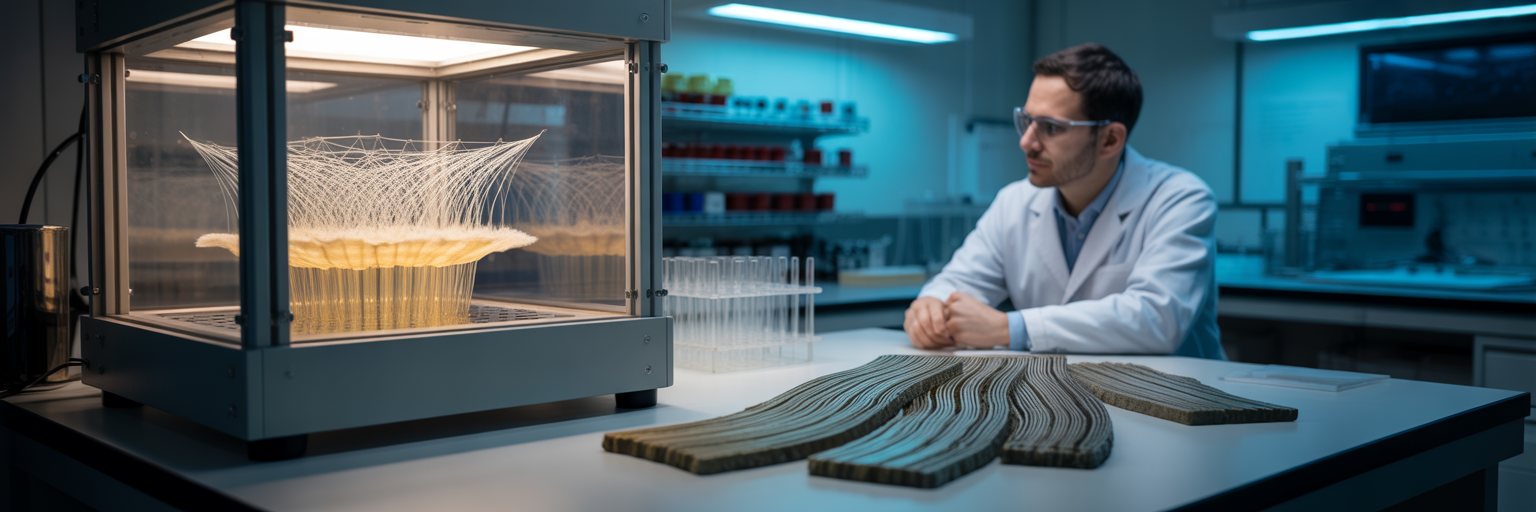
The limpet tooth is more than just a biological curiosity; it is a blueprint for a new class of materials. This is the core idea behind biomimicry materials science, a field dedicated to designing systems modeled on nature’s elegant and efficient solutions. For engineers and materials scientists, the limpet tooth offers a profound lesson: how to create ultra-strong yet lightweight composite materials by precisely controlling the arrangement of reinforcing fibers at the nanoscale.
The primary takeaway is that by growing mineral fibers to a critical, flaw-free size, it is possible to create materials that approach their theoretical strength limits. Researchers are now exploring ways to replicate this process in the lab. As reported by Nature Communications, scientists are developing methods for the biomimetic generation of this material, aiming to grow mineralized chitin scaffolds that mimic the tooth’s structure. The challenge lies in scaling this natural process for cost-effective, large-scale manufacturing.
If successful, the potential applications are vast. This technology could lead to high-performance, lightweight components for the automotive and aerospace industries, resulting in safer car chassis and more fuel-efficient airplanes. In medicine, it could inspire more durable and biocompatible dental fillings or bone replacements. It could even be used to create the next generation of body armor. The idea of learning from nature’s ‘technology’ is a recurring theme, with other marvels like the star-nosed mole that eats faster than you can blink reinforcing this principle. This principle of combining high-performance structure with sophisticated design is not just a goal for heavy industry; it’s also reflected in the art of polished tech in modern accessories, where durability and aesthetics merge.
Frequently Asked Questions About Limpet Teeth
Are limpet teeth really stronger than steel?
This depends on the specific measurement and the type of steel. In terms of tensile strength, which is the resistance to being pulled apart, the material of limpet teeth is stronger than many common steels. However, certain high-performance steel alloys may be superior in other properties like toughness or overall hardness. The comparison is most useful for highlighting the tooth’s exceptional performance relative to its biological origin and tiny size.
How big are limpet teeth?
Limpet teeth are microscopic. They are typically less than a millimeter in length and are arranged in rows on the radula. Their incredible strength is a property of the material at the nanoscale, not a result of their size. It is the flawless arrangement of nanometer-scale fibers that gives them their power.
Why are they stronger than spider silk?
The key difference is their composition. Spider silk is a protein-based material, which gives it remarkable toughness and high tensile strength. Limpet teeth, however, are a composite material. They combine a protein (chitin) with a hard mineral (goethite). The perfectly formed, nanoscale goethite fibers are what give the teeth their record-breaking tensile strength, which exceeds that of spider silk.
Can we find limpet teeth on the beach?
This is extremely unlikely. The teeth are part of the radula, an organ located inside the limpet’s body. While the outermost teeth are shed as they wear down, they are microscopic and would be completely invisible to the naked eye among sand and other debris.
When will we see products made from this technology?
It is important to have realistic expectations. This technology is currently in the research and development phase. While scientists understand the principles behind the tooth’s strength, replicating that complex nanostructure in a lab and then scaling it up for cost-effective manufacturing is a major engineering hurdle. It will likely be many years before consumer products based directly on this technology become widely available.