An Introduction to the Spider That Builds a Fake Spider
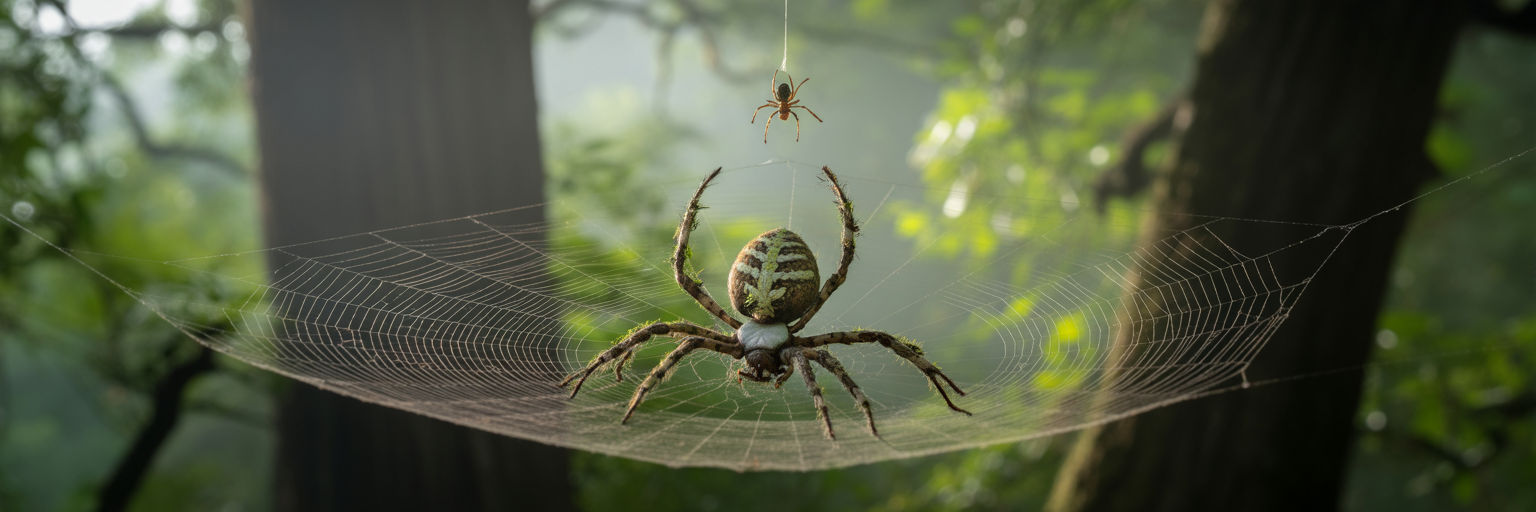
In the dense, humid air of a tropical forest, a casual glance might reveal a large, imposing spider suspended in the center of an orb-web. Its long, spindly legs and bulky body seem to promise a dangerous encounter. A closer look, however, reveals something far more astonishing. The menacing figure is a fake, an elaborate sculpture crafted from debris and silk. The true artist is a tiny, almost insignificant arachnid hiding nearby, the mastermind behind this clever illusion. This is the work of the spider that builds a fake spider, a creature that turns natural refuse into a sophisticated tool for survival.
This behavior is not a random act of web decoration. It is a calculated strategy executed by a small orb-weaver from the Cyclosa genus. The decoy, often many times larger than its creator, is designed to present a startling and intimidating silhouette to would-be attackers. The sheer difference in scale is a testament to the evolutionary pressures these small creatures face. The construction is a remarkable feat of engineering, where every piece of twig and dried leaf serves a purpose in the grand deception.
This article explores the fascinating world of this arachnid architect. We will investigate what this spider is and the precise reasons it dedicates so much energy to building its effigy. We will also examine the specific materials it uses to construct such a convincing model and what this incredible adaptation reveals about the constant struggle for survival. This unique orb-weaver spider behavior offers a window into the intricate and often surprising solutions that nature produces.
Meet the Master Architect: The Cyclosa Genus
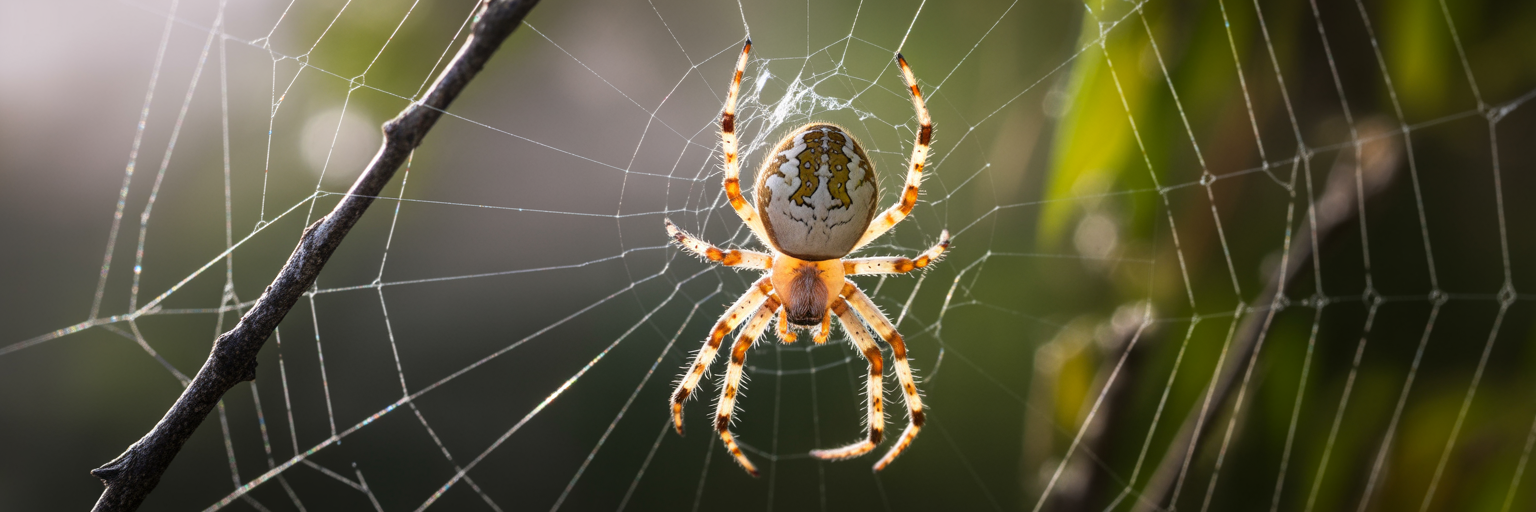
The creator of this elaborate deception belongs to the Cyclosa genus, a group of spiders that are masters of camouflage and construction. To understand their unique decoy-building behavior, it is essential to first understand the spiders themselves.
Profile of an Orb-Weaver
Cyclosa spiders are part of the Araneidae family, a massive group commonly known as orb-weaving spiders. Like their relatives, they construct the familiar spiral-shaped webs used to catch flying insects. Physically, many Cyclosa species are distinguished by their elongated, often bumpy or tuberculated abdomens. Their bodies frequently have a silvery sheen, which helps them blend into the dappled light of their forest homes, providing a first line of defense against predators.
These spiders have a pan-tropical distribution, thriving in the warm, humid climates found across the globe. The specific decoy-building behavior has been formally studied and documented in locations as far-flung as the Amazon rainforest in Peru and the tropical jungles of the Philippines. This wide distribution suggests that the strategy is a successful response to a common set of environmental challenges, namely the presence of sharp-eyed predators that hunt during the day.
Defining the Stabilimentum
The fake spider is technically a highly specialized type of spider web stabilimentum. A stabilimentum is any distinct, often conspicuous, structure that a spider adds to its web. These decorations can be made from silk, debris, or even the spider’s own egg sacs. While many orb-weavers create them, few produce anything as complex as the Cyclosa spider decoy.
To appreciate its uniqueness, one can compare it to the more common stabilimenta seen in other spiders. For example, the Argiope spiders, or garden spiders, are famous for weaving a thick, zig-zag pattern of silk in the center of their webs. While visually striking, this pattern is a simple, two-dimensional addition. The Cyclosa’s creation, in contrast, is a three-dimensional effigy built to mimic the form of another creature. This leap in complexity from a simple pattern to a life-like sculpture underscores just how remarkable this particular anti-predator adaptation truly is.
A Masterclass in Deception: The Decoy’s Purpose
The primary function of the Cyclosa spider decoy is defense. In an environment filled with visual hunters like predatory wasps, damselflies, and even birds, a small spider is an easy target. The decoy is a critical anti-predator adaptation that helps the spider avoid becoming a meal. Researchers have proposed two main theories to explain how this elaborate ruse works.
The Intimidation Hypothesis
The first theory is straightforward intimidation. A small, vulnerable spider is an inviting target, but a large, leggy, and seemingly formidable one is not. The decoy’s exaggerated size and spider-like shape may be enough to deter a potential predator from attacking in the first place. A hunting wasp or bird, seeing the large effigy, might judge the potential risk to be too high and move on in search of an easier meal. In this scenario, the decoy functions as a scarecrow, protecting the real spider through sheer visual deterrence.
The Misdirection Hypothesis
The second, more widely supported theory is the misdirection hypothesis. Instead of scaring predators away, the decoy acts as a sacrificial lure. A predator is tricked into attacking the large, obvious decoy, which is a non-vital target made of disposable materials. While the attacker wastes its energy on the fake, the much smaller, real spider has a chance to drop from the web or remain perfectly still, camouflaged against the background. This gives it precious seconds to escape unharmed. A 2024 study in Ecology and Evolution noted that these decoys are particularly effective against visually oriented hunters like hummingbirds and damselflies, supporting the idea that the visual trickery is key.
To enhance the illusion, some Cyclosa spiders will actively shake their web when a threat approaches. This vibration causes the decoy to move, making it appear alive and presenting an even more convincing target for a predator to strike. This level of trickery is one of many animal deception strategies found in nature. For example, some caterpillars have evolved to mimic the scent and sound of ant larvae, tricking entire ant colonies into carrying them into the nest and raising them as their own. You can learn more about this phenomenon by reading about the caterpillar that tricks ant colonies into raising it.
Building the Arachnid Effigy
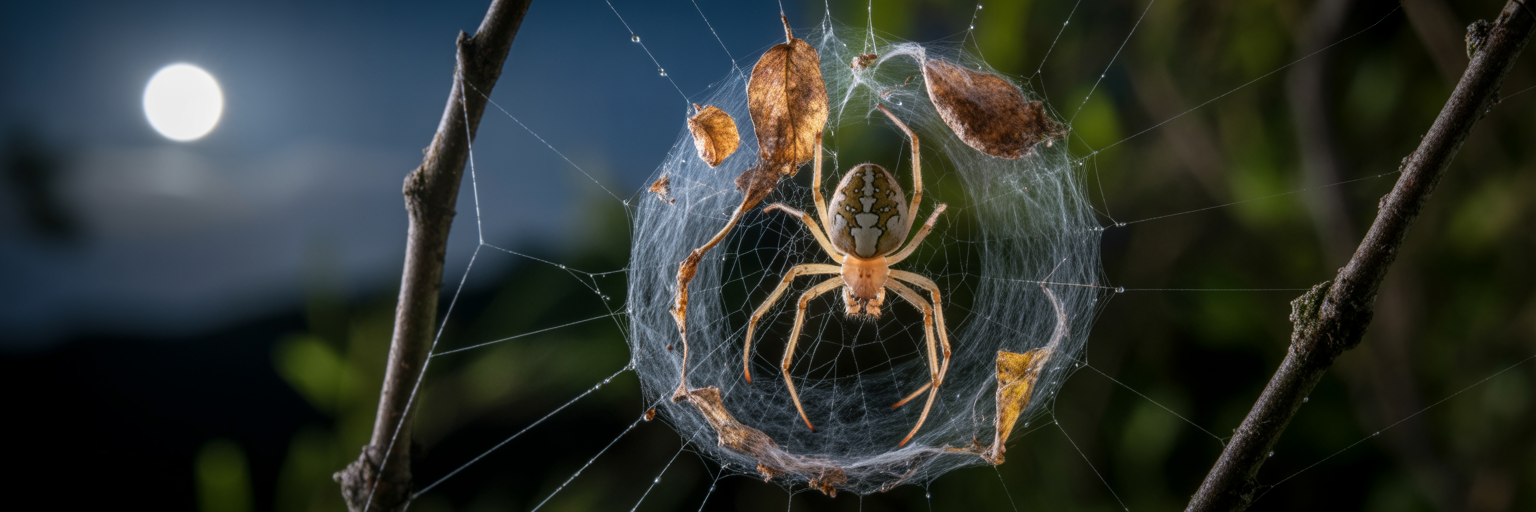
The construction of the Cyclosa spider decoy is a meticulous and labor-intensive process. It represents a significant investment of the spider’s time and energy, which underscores just how vital this defensive structure is for its survival. The entire project is carefully timed and executed in distinct stages.
A Nocturnal Construction Project
Most of the decoy construction is carried out under the cover of darkness. This timing is a strategic choice. The spider’s main predators are diurnal, meaning they hunt during the day. By building at night, the spider avoids exposing itself while it is preoccupied and vulnerable. During these hours, it can focus entirely on its architectural task without the constant threat of being spotted by a passing wasp or bird.
Researchers have observed a two-stage method for the build. In the first stage, the spider gathers all the necessary materials, such as dried leaves, twigs, and the remains of its previous meals. It then carefully assembles these components into the core structure of the decoy, binding them together with silk. Once the effigy is complete, the spider moves to the second stage: finishing the rest of its functional orb-web. It spins the sticky spiral lines around the decoy, ensuring the entire trap is ready to catch prey by the time dawn breaks.
The Evolutionary Trade-Off
This dedication to decoy construction comes at a cost. The time and energy spent building the fake spider cannot be used for other essential activities. For example, the spider forgoes maximizing its time for foraging or building a traditional silken retreat for itself. This is a classic evolutionary trade-off. The spider sacrifices potential food and shelter for a greater chance of survival.
The fact that this behavior has evolved and persisted demonstrates that the defensive benefits outweigh the costs. The protection afforded by the decoy is so critical that it justifies the significant resource expenditure. This level of specialized adaptation is seen across the animal kingdom, where creatures invest heavily in unique defensive structures. A fascinating parallel is the parrotfish that constructs a protective bubble of its own slime to sleep in each night, another example of an animal dedicating precious energy to a unique survival mechanism.
The Gruesome Materials of a Spider Decoy
The effectiveness of the Cyclosa spider decoy lies in its construction. The spider uses a specific and carefully chosen collection of materials to create a convincing, three-dimensional figure. The combination of these components results in a structure that, from a predator’s perspective, effectively mimics the appearance of a larger, more threatening arachnid.
The primary materials used to build the effigy include:
- Silk: This is the essential binding agent. The spider uses its silk to wrap and hold all the other components together, forming a cohesive and durable structure.
- Dried Leaves, Twigs, and Plant Debris: These materials provide the bulk, shape, and structural framework for the decoy. The spider arranges them to form the general silhouette of a body and long, spindly legs.
- Prey Carcasses: In a macabre but highly functional act of recycling, the spider incorporates the dried-out husks of its past meals into the decoy. These add texture and complexity to the structure.
- Egg Sacs: The spider’s own egg sacs are sometimes woven into the decoy. This adds volume and may also serve to protect the spider’s offspring by concealing them within the larger, intimidating structure.
Each material plays a crucial role. Silk acts as the glue that holds the entire sculpture together. Plant detritus is carefully arranged to create the unmistakable outline of a spider. The addition of prey carcasses is particularly ingenious. These leftovers add a lumpy, organic texture that makes the effigy appear more life-like and less like a simple collection of leaves. This completes the visual illusion, turning a pile of forest floor debris into a masterful work of defensive art.
Regional Tactics: Peruvian vs. Philippine Decoys
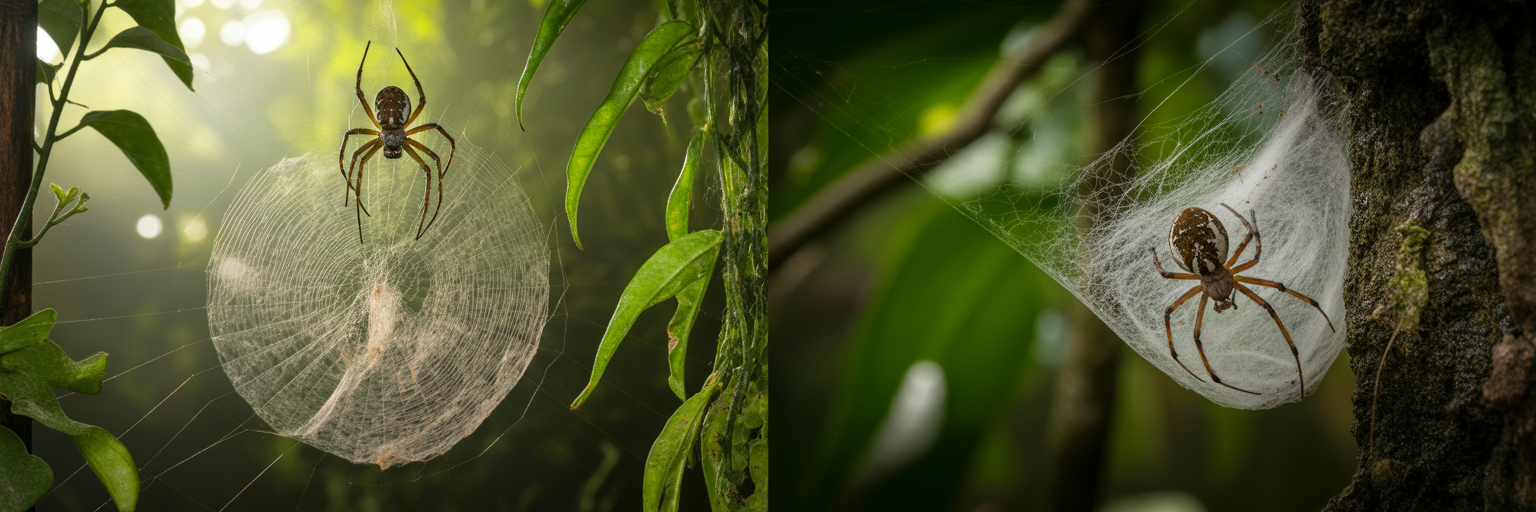
One of the most fascinating aspects of this orb-weaver spider behavior is that it is not a monolithic strategy. Research has revealed intriguing variations between different geographic populations, particularly when comparing the Cyclosa spiders of Peru with those in the Philippines. These differences suggest that the behavior is highly adaptable and fine-tuned to local conditions.
The Cyclosa species documented in Peru typically build a decoy and then position themselves on the web just above or near it. This tactic aligns perfectly with the misdirection hypothesis. The spider and the decoy are two separate targets. The goal is to draw a predator’s attack toward the large, expendable decoy, allowing the real spider to escape. The decoy serves as a distinct lure.
In contrast, the strategy observed in the Philippines is different. As reported in a 2014 Wired article, these spiders often construct the decoy in a way that allows them to hide directly inside it. They integrate their own body into the structure, using the effigy as a form of camouflage or physical armor. Here, the decoy is not a separate lure but an extension of the spider itself, transforming it from a simple distraction into a sophisticated hiding spot.
These contrasting strategies highlight the adaptability of this behavior, likely shaped by the specific types of predators present in each region.
| Feature | Peruvian Species Tactic | Philippine Species Tactic |
|---|---|---|
| Spider’s Position | Perches near or above the decoy | Hides directly inside the decoy |
| Decoy’s Primary Function | Misdirection (lure) | Camouflage / Armor |
| Interaction with Decoy | Separate from the decoy | Integrated with the decoy |
| Implied Defensive Goal | Divert attack to a false target | Become invisible or protected |
The Evolutionary Arms Race Behind the Decoy
The decoy-building behavior of the Cyclosa spider is a textbook example of evolution in action. It can be understood within the broader context of an “evolutionary arms race,” a concept where predator and prey species continually develop more sophisticated adaptations to outwit each other over generations. As predators become better at finding prey, the prey must develop better ways to hide, escape, or defend themselves.
This phenomenon also illustrates the principle of “convergent evolution.” This is the process where unrelated or geographically separate species independently evolve similar traits because they are adapting to similar environmental challenges. The fact that decoy-building Cyclosa spiders have been found in both Peru and the Philippines, exhibiting similar but distinct strategies, strongly suggests this is the case. The intense pressure from visual predators in both locations likely acted as the selective force that drove these separate populations to independently develop the same complex solution.
This constant need for species to adapt and refine their survival tactics is a fundamental principle of biology. In a way, it mirrors how modern strategies in other fields must also evolve. For instance, developing a future-proof SEO to boost website traffic requires continuous adaptation to a changing digital environment. The Cyclosa spider decoy is more than just a natural curiosity. It is a powerful, living example of natural selection at work, representing a highly specialized solution to the universal problem of staying alive. This behavior is as remarkable as that of the Suriname toad that gives birth through holes in its back, another extreme evolutionary solution to the challenges of survival.
Frequently Asked Questions About the Decoy-Building Spider
Question: Is the Cyclosa spider poisonous to humans?
Answer: Like most spiders, Cyclosa species do possess venom, which they use to subdue their insect prey. However, their venom is not considered medically significant to humans. Furthermore, their fangs are generally too small and weak to effectively pierce human skin, making them harmless to people.
Question: How big is the real spider compared to the decoy?
Answer: The size difference is dramatic and key to the deception. The actual Cyclosa spider is quite small, often measuring less than a centimeter (under half an inch) in body length. In contrast, the decoys they build can be up to 10 times larger, creating an intimidating effigy that effectively misleads predators.
Question: Do other animals make decoys like this?
Answer: While the spider-shaped decoy of the Cyclosa is unique, the general strategy of using decoys for defense is seen elsewhere in the animal kingdom. For example, some bird species create several fake nests to lure predators away from the real one containing their eggs. Certain species of caterpillars are known to mimic the appearance of snakes to scare off threats.
Question: Why don’t all Cyclosa spiders build these decoys?
Answer: Decoy-building is a highly specialized trait, not a universal one for all species within the Cyclosa genus. This complex behavior is found primarily in species that inhabit environments with intense pressure from visual predators. Other Cyclosa species living in different habitats may use alternative forms of camouflage or simpler web decorations, such as a line of debris, that are better suited to their specific local threats.